USB Portable Blender Guide: Smoothies, Cleaning & Limits
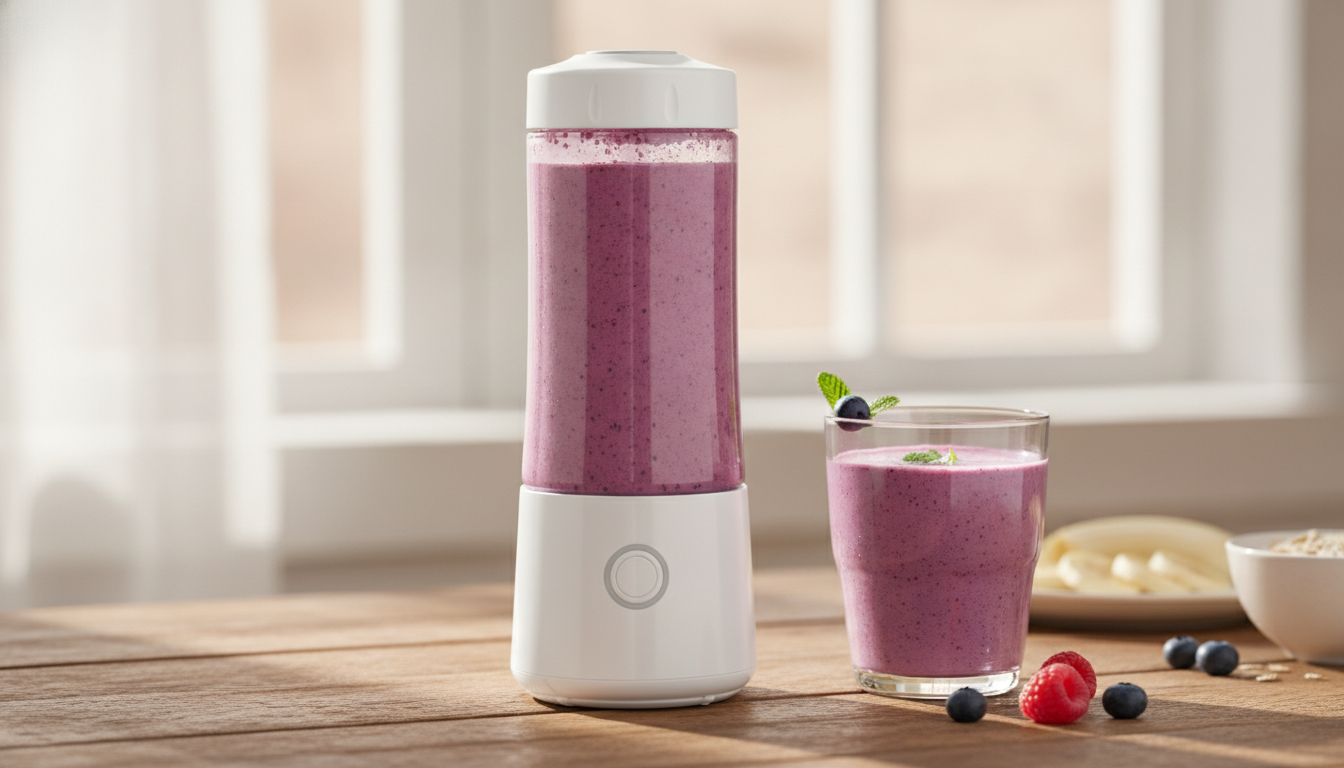
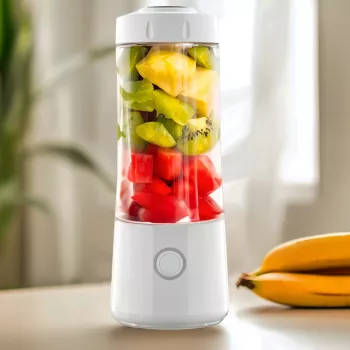
Compact High-Speed Portable Juicer – USB Powered Fruit Blender & Personal Food Processor
A compact, USB-powered blender can make quick smoothies, shakes, and light purees without taking up counter space. This guide covers what this portable juicer-style blender does well, where it has limits, and how to use and care for it for consistent results—whether it’s headed to your desk, gym bag, or a tiny dorm kitchenette.
What It Is and What It’s Best For
A portable juicer-style blender is a cup-format, single-serve blender built for quick blends and easy carrying. It’s designed for simple routines: add ingredients, blend, and drink from the same container.
- Portable, cup-style blender designed for single servings and quick blends on the go
- Ideal for soft fruits, protein shakes, meal-replacement drinks, and light purees
- Useful for travel, office, gym, dorm rooms, and small kitchens
- Not a replacement for a full-size countertop blender for large batches or hard ingredients
Key Features to Look For in Daily Use
Small blenders succeed when they match real-life habits: quick charging, minimal mess, and predictable results with everyday ingredients.
- USB charging for flexible power access (power bank, laptop, car charger, wall adapter)
- Compact footprint and lightweight build for easy storage and packing
- One-cup blending to reduce prep and cleanup time
- Secure lid and cup design to help prevent leaks while carrying
- Blade and motor strength suited to soft produce and pre-cut pieces
Performance Expectations: What It Can (and Can’t) Handle
Portable blenders shine with softer textures and enough liquid to keep ingredients moving. Knowing the boundaries helps avoid stalls, uneven chunks, and battery strain.
- Handles well: bananas, berries, mango, melon, cooked oats, yogurt, milk, plant milks, protein powder, nut butters (small amounts)
- Sometimes needs extra help: leafy greens (blend longer, add more liquid, shake between cycles)
- Avoid or pre-process: large ice cubes, frozen fruit blocks, very hard raw vegetables, thick dough-like mixes
- Best results come from smaller pieces, enough liquid to create a vortex, and short pauses to redistribute ingredients
Quick Start: How to Blend Smoothly Every Time
For a consistently smooth drink, the order and texture of ingredients matter as much as the motor. A few small habits can dramatically reduce stalling and leftover chunks.
- Cut fruit into small chunks; add liquids first, then soft ingredients, then powders last
- Fill within recommended capacity to avoid stalling and spills
- If the blend stops circulating, pause and gently shake or stir, then continue
- For colder drinks, use small ice chips or partially thawed frozen fruit instead of large frozen blocks
- For thicker textures (smoothie bowls), blend in short bursts and increase liquid gradually
If a blend feels “stuck,” the fix is usually simple: add a splash more liquid, give it a brief shake, and restart. Portable units depend on flow; when ingredients can’t circulate, the blades just carve a small tunnel instead of smoothing the whole cup.
Cleaning, Care, and Everyday Hygiene
Because smoothies often include dairy, fresh fruit, and protein powders, cleaning quickly is more than a convenience—it helps prevent odors and residue buildup.
- Rinse immediately after use to prevent residue from drying on the cup and blades
- Self-rinse method: add warm water + a drop of dish soap, run a short cycle, then rinse thoroughly
- Keep charging port area dry; avoid soaking the motor base
- Dry components fully before reassembling for storage
- Replace or discontinue use if the cup is cracked, the seal is damaged, or the blade assembly becomes loose
For general kitchen hygiene guidance, see the USDA’s “Clean” food-safety basics: USDA FSIS — Kitchen Companion: Clean. If preparing drinks for someone at higher risk, additional precautions can help: FDA — Food Safety for People with Weakened Immune Systems.
How to Choose the Right Portable Blender
Picking the right portable blender is mostly about matching capacity and power to what you actually blend—not the most extreme scenario you might try once.
For anyone building a more consistent smoothie routine, a simple planning tool can help keep ingredients and habits on track. The Goal-Setting Guide for Real Results – Printable Goal Planner, SMART Goals Workbook & Productivity Template for Achievable Success can be used to map weekly prep, hydration goals, and grab-and-go snack plans alongside workout or work schedules.
At-a-Glance Checklist
| Need | What to look for | Why it matters |
|---|---|---|
| Commute-friendly | Leak-resistant lid and compact shape | Reduces spills in bags and fits tight spaces |
| Fast smoothies | Strong motor for soft fruit + sufficient liquid flow | Smoother texture with fewer stalls |
| Easy cleaning | Cup and blade area that rinses quickly | Less odor buildup and less stuck-on residue |
| Travel flexibility | USB charging compatible with power banks | Blends without needing a wall outlet |
| Cold drinks | Ability to handle small ice chips/partially thawed frozen fruit | Better texture without motor strain |
Safety Notes for Blending and Charging
Product Option
FAQ
Can a USB portable blender crush ice or blend frozen fruit?
Performance varies by model, but most do best with small ice chips or partially thawed frozen fruit. Use enough liquid, blend in short cycles, and pause to shake the cup between cycles to prevent stalling.
How should a portable blender be cleaned without damaging it?
Rinse right after use, then run a quick self-clean cycle with warm water and a drop of dish soap, followed by a thorough rinse. Keep the motor base and charging port dry, and avoid soaking the base in water.
Why does a portable blender sometimes stop blending or leave chunks?
Common causes include overfilling, too little liquid, pieces that are too large, or a mix that’s too thick. Pause to shake or stir, add a bit more liquid, and remember that very hard ingredients can exceed what a small motor is meant to handle.










Leave a comment