Talk & Connect Workbook: Better Parent-Child Talks

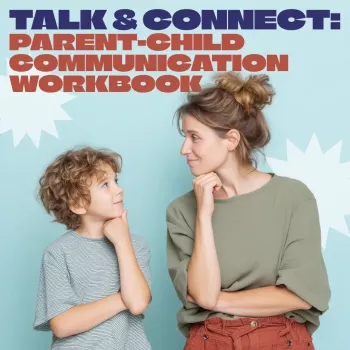
Talk & Connect: A Parent-Child Communication Workbook for Stronger Bonds
Daily life can crowd out meaningful conversations—especially when emotions run high, schedules are tight, or kids struggle to find the right words. A workbook-centered approach makes communication feel less like a “big talk” and more like a steady rhythm: simple prompts, short reflection pages, and repeatable scripts that help you listen first, set limits calmly, and reconnect quickly after conflict. Over time, these small practices add up to a home where children feel seen, safe, and understood.
What “talk and connect” looks like at home
“Talk and connect” is less about saying the perfect thing and more about protecting the relationship while you guide behavior. That often means choosing connection over correction: a calm tone, one clear limit, and a short explanation—without piling on a lecture. Kids learn best when their nervous system is settled, and your steady delivery helps their brain stay online.
Small moments matter, too. A 60-second check-in at breakfast, a question in the car, or a quick bedtime reflection builds consistency without adding stress. When communication is two-way—parents naming feelings and needs without blame, kids practicing the same—trust grows. The progress is noticeable: fewer power struggles, faster repair after conflict, and more spontaneous sharing from your child.
Who this workbook supports best
This style of workbook works especially well for families who want structure but don’t want conversations to feel forced. It’s a strong fit for:
- Parents of kids who shut down, get defensive, or say “nothing” when asked about their day.
- Families navigating big feelings: anxiety, frustration, jealousy, sibling conflict, or transitions like a new school, divorce, or a move.
- Caregivers who want practical prompts—ready-to-use conversation starters and reflection pages that reduce guesswork.
- Co-parents and blended families who want shared language for expectations, empathy, and follow-through.
Core skills the activities can strengthen
Workbook pages tend to focus on a handful of high-impact communication skills that translate directly into everyday life:
- Active listening: reflecting what you heard before solving (“It sounds like you felt left out…”).
- Emotion labeling: helping kids move from vague (“mad”) to specific (“disappointed,” “embarrassed,” “worried”).
- Repair conversations: short scripts for apologizing, making amends, and reconnecting after conflict.
- Problem-solving steps: define the issue, brainstorm options, pick one, then review what worked.
- Boundary setting with warmth: firm limits paired with validation (“No hitting. You can stomp or squeeze a pillow.”).
These tools align with widely recommended positive parenting approaches that emphasize connection, consistency, and age-appropriate expectations. For additional guidance, helpful resources include HealthyChildren.org from the American Academy of Pediatrics, the CDC Essentials for Parenting, and parenting resources from the American Psychological Association.
Conversation starters that feel natural (not like an interrogation)
Many kids open up when questions are low-pressure and specific. Instead of “How was your day?” try rotating a few of these:
- Low-pressure openers: “What was the easiest part of today?” “What was the hardest part?” “Who did you sit with?”
- Feelings + details: “When did you feel proud today?” “When did you feel annoyed?”
- Values and character: “What was something kind you noticed?” “What would you do differently next time?”
- Connection bids: “Want advice, help, or just for me to listen?”
- For older kids: “What’s a topic you wish adults understood better?” “What’s one thing that would make school less stressful?”
If your child is quiet, ask fewer questions—then wait. A pause can feel long to an adult, but it’s often the space a child needs to find words.
A simple weekly routine for stronger communication
Consistency beats intensity. A “little and often” rhythm keeps conversations from stacking up until they explode. A realistic routine looks like:
Quick guide: match the prompt to the moment
| Situation | Try this type of prompt | Parent response to practice |
|---|---|---|
| Child says “fine” or “nothing” | Choice questions (“A or B?”) + gentle follow-up | Reflect, don’t push: “Okay. I’m here if you want to talk later.” |
| Meltdown or shutdown | Body-based calming + feeling label | Co-regulate: “Let’s breathe together. Your body looks overwhelmed.” |
| After a disagreement | Repair script + accountability | Own your part: “I raised my voice. Next time I’ll pause.” |
| Sibling conflict | Turn-taking story (“What happened? How did it feel?”) | Coach fairness: validate both, then set one clear rule |
| Big transition (new school, move, divorce) | Worry + wish prompts | Normalize: “It makes sense to feel nervous. What would help this week?” |
Getting the most out of the workbook pages
Common obstacles and easy fixes
When extra support is a good idea
Talk & Connect workbook at a glance
- Talk & Connect: Parent-Child Communication Workbook — guided prompts and bonding activities designed to improve listening, expand emotional vocabulary, and make repair after conflict easier to follow.
- Confident Kids Bundle: Nurturing Emotional Strength — a helpful add-on for families also building confidence, self-esteem, and emotional skills through broader activities.
FAQ
What age range works best for a parent-child communication workbook?
Most families can adapt the prompts across ages: preschoolers do best with short choices and pictures, school-age kids respond well to feelings plus simple stories, and teens tend to engage more with privacy-respecting prompts and collaborative problem-solving.
How often should the activities be used to see a difference?
A realistic routine is 3–5 minutes most days or one 15-minute weekly session, with extra focus on brief repair conversations after conflicts. Consistency and a calm tone usually matter more than the length of each session.
What if a child refuses to answer the questions?
Try parallel play (drawing, building, walking) while using one prompt at a time, offer two options instead of open-ended questions, or let your child choose the prompts. Validate without forcing—often the willingness to talk returns when kids feel in control and not pressured.










Leave a comment