Spill-Proof 2.5 Gal Car Trash Can for Clean, Easy Drives
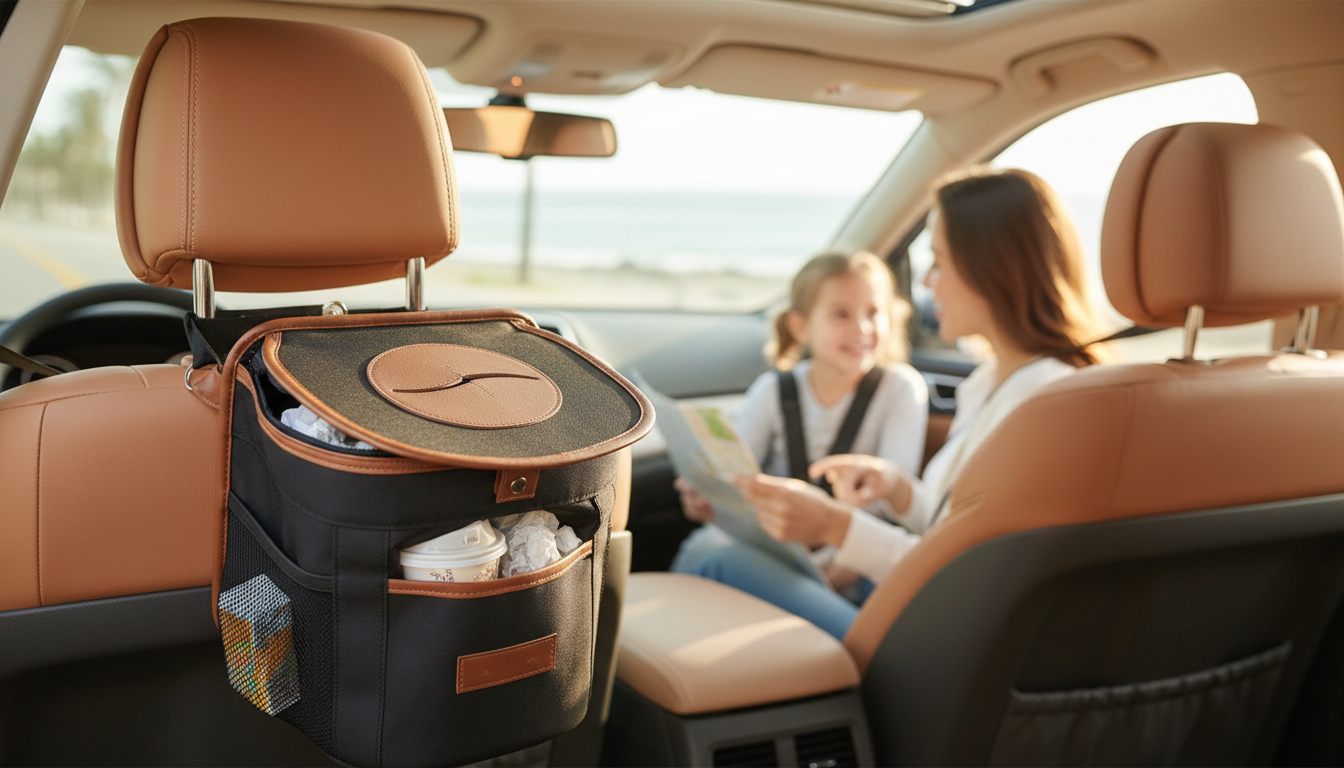
Spill-Proof Car Trash Can (2.5 Gal) with Headrest or Center Console Attachment
A dedicated in-car trash solution helps keep wrappers, tissues, receipts, and sticky messes contained without rolling around the cabin. This 2.5-gallon spill-resistant car trash can is designed to hang from a headrest or secure near the center console so cleanup stays quick, controlled, and low-effort on everyday drives or longer trips. By giving everyone a clear “trash goes here” spot, it’s easier to keep attention on the road instead of managing clutter—an important part of reducing distraction behind the wheel (see NHTSA guidance on distracted driving and the CDC’s overview).
What It Solves (Beyond Loose Garbage)
Cabin mess usually starts small: a receipt on the passenger seat, a straw wrapper in a cup holder, a used napkin in a door pocket. Over time, those “temporary” placements turn into buildup that’s annoying to clean—and easy to knock onto the floor.
- Prevents crumbs, wrappers, and receipts from accumulating in door pockets and cup holders
- Reduces the chance of spills from used napkins, drink lids, or small liquid waste
- Keeps trash in one consistent location for drivers and passengers
- Helps maintain a cleaner cabin that’s easier to vacuum and wipe down
- Cuts down on clutter that can become a distraction while driving
When trash has a “home,” it’s less likely to migrate under seats, jam between the console and seat rails, or get stepped on and ground into carpet.
Design Highlights: Spill-Resistant, Compact, and Easy to Place
A 2.5-gallon bin hits a sweet spot for most vehicles: large enough to be useful for daily routines, yet compact enough to avoid crowding the cabin. The spill-resistant structure is especially helpful for waste that’s slightly wet or messy—used tissues, sticky candy wrappers, condiment packets, or drink-lid drips that can otherwise smear on upholstery.
- 2.5-gallon capacity balances daily utility with a footprint that suits most cars, SUVs, and trucks
- Spill-resistant structure helps contain wet or messy waste (used tissues, food packaging, etc.)
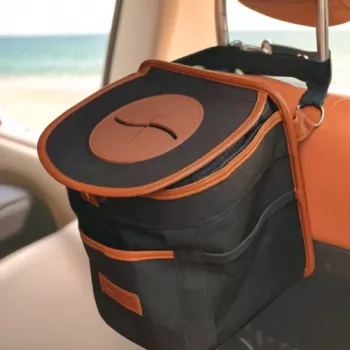
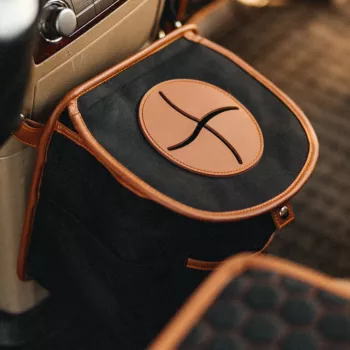
- Flexible mounting options support headrest hanging or placement/attachment near the center console
- Works well for front-seat convenience or back-seat passenger use
- Pairs nicely with disposable liners for faster emptying and less contact with waste
Quick Specs and Fit Guide
| Feature | What to expect | Best use |
|---|---|---|
| Capacity | 2.5 gal | Daily commuting, rideshare shifts, family errands |
| Mounting | Headrest or center-console area attachment | Choose based on passenger access and legroom |
| Spill resistance | Helps prevent leaks and sloshing | Wet tissues, sticky wrappers, small liquid residue |
| Ideal placement | Behind front seats or beside console | Keeps trash reachable without roaming clutter |
Where to Attach It: Headrest vs. Center Console
Placement matters because the “best” trash can is the one people actually use. Pick the spot that matches who’s generating most of the waste and when it happens.
- Headrest mounting keeps the floor clear and is convenient for rear passengers (kids, carpools, road trips)
- Center console placement is best for drivers who want one-hand access at stops and during parking
- Avoid blocking seat tracks, seatbelt buckles, or rear passenger legroom
- For rideshare or frequent passengers, rear-headrest placement often reduces awkward reaching
- For solo commuting, a console-adjacent position can reduce the urge to toss items into cup holders
A practical rule: if passengers are the primary users, hang it behind a front seat. If the driver is the primary user, keep it close to the console—but positioned so it doesn’t interfere with shifting, parking brake access, or knee room.
How to Use It Cleanly (with or without Liners)
Spill resistance helps, but cleanliness comes from simple habits. Liners are the biggest upgrade because they reduce residue and make “emptying” a fast swap instead of a cleanup project.
How to Choose the Right Car Trash Can for Your Setup
Choosing by Driving Routine
| Routine | Recommended capacity | Best mounting spot | Why it works |
|---|---|---|---|
| Solo commute | 1–2.5 gal | Center console area | Easy access, less clutter near pedals |
| Family errands | 2.5 gal | Back of front headrest | Passengers can use it without passing trash forward |
| Road trips | 2.5 gal+ | Headrest + spare liners | Fewer stops to empty, easier cleanouts |
| Rideshare/carpool | 2.5 gal | Rear headrest | Simple for passengers, cleaner ratings and faster resets |
Good Habits That Keep the Cabin Cleaner
For drivers who like systems, pairing a vehicle clean-up habit with a broader routine can make it easier to stay consistent. If you enjoy planning simple, trackable resets, consider the Goal-Setting Guide for Real Results – Printable Goal Planner, SMART Goals Workbook & Productivity Template for Achievable Success to build a repeatable checklist you’ll actually keep up with.
FAQ
Is a 2.5-gallon car trash can big enough for road trips?
For most trips, yes—it typically holds snack packaging, tissues, and receipts for several hours or a full day of driving. Use liners and plan quick empties at fuel or rest stops to keep odors down and prevent overflow.
Where should a car trash can be mounted so it doesn’t get in the way?
Headrest mounting is usually best for rear passenger access and keeps the floor clear, while a console-adjacent spot works well for drivers at stops. Make sure it won’t interfere with seat tracks, seatbelts, airbags, or passenger legroom.
How can odor be minimized in an in-car trash bin?
Use a liner, empty it frequently (especially in hot weather), and avoid tossing in open liquids. Wipe or rinse the interior periodically and consider an odor absorber if food waste is common.







Leave a comment