Safe Space Mapping Made Simple: A Step-by-Step Guide
Understanding Safe Space Mapping
Safe space mapping is a practical way to identify where safety, support, and regulation already exist—and where they can be strengthened. Instead of holding a vague goal like “feel safer,” mapping turns daily life into a set of visible patterns and choices across real settings: home, school, work, online spaces, and community environments. Over time, a map can reduce overwhelm, improve boundaries, and make support easier to ask for because needs become specific and actionable.
What “safe space” means (and what it doesn’t)
A “safe space” is any environment or relationship that reduces threat responses and supports regulation, dignity, and choice. It can be a room, a routine, a person, a group norm, or a digital setting—anything that helps your nervous system settle and helps you feel respected and in control.
Safe spaces aren’t about avoiding all discomfort. Growth, honest feedback, and difficult conversations can still happen. The difference is that harm is minimized and supports are predictable (clear norms, consent, options to pause, and ways to step away).
Safety has multiple layers, and it helps to map them separately:
Types of safety to map
| Type | What it includes | Examples of signals |
|---|---|---|
| Physical | Environment, access, privacy, sensory load | Clear exits, manageable noise, secure locks, predictable routines |
| Emotional | Respect, boundaries, communication norms | No ridicule, permission to pause, accountability, consent-based topics |
| Social | Belonging, identity affirmation, fair treatment | Correct names/pronouns, inclusive policies, allies present |
| Digital | Online boundaries and protections | Muted keywords, blocked accounts, private groups, strong passwords |
Safety can also be situational. A place may feel fine on a quiet morning and tense during a crowded evening. The people present, power dynamics, and your stress load can all change the “safety score” fast.
Why mapping works: turning feelings into patterns and choices
Mapping helps you spot repeatable patterns: which places drain energy, which people stabilize you, and which times of day increase vulnerability. That’s useful because the body often recognizes safety before the mind can explain it.
It also makes support easier to request. “I need a quiet corner for five minutes,” “Can you sit next to me in the meeting?” or “Please text me at 8:30 so I don’t spiral after that call” are clearer than “I’m not okay.”
This approach fits trauma-informed planning because it emphasizes choice, predictability, and empowerment rather than perfection. For a deeper overview of trauma-informed principles, see SAMHSA’s TIP 57.
Gathering inputs before drawing the map
Before you draw anything, collect a few inputs so your map reflects real life rather than wishful thinking:
- List key environments: home, workplace/school, commuting routes, medical settings, online communities, social events.
- Name roles and power dynamics: supervisor, teacher, family elder, group admin—these often affect what feels “allowed.”
- Track body cues: signs of safety (slower breathing, shoulders drop) versus threat (tight chest, scanning exits, irritability).
- Pick a rating scale: for example 1–5, and define what each number means so you can compare weeks consistently.
- Decide privacy boundaries: your personal map can be detailed; a shareable version can be simplified for a therapist, partner, or support person.
How to create a safe space map (a simple step-by-step method)
Step 1: Sketch a “life map”
Draw circles for major settings (home, work/school, online, community) and add lines to key people, resources, or routines that influence safety.
Step 2: Rate each type of safety separately
Instead of one overall score, rate physical, emotional, social, and digital safety. A place can be physically safe but emotionally risky, or socially welcoming but digitally messy (group chats, shared photos, pressure to respond).
Step 3: Add triggers and stressors as neutral data
List stressors without judgment: crowds, certain topics, surprise touch, performance pressure, loud audio, unclear expectations.
Step 4: Add protective factors
Protective factors can be people (a supportive colleague), spaces (a quiet room), or skills (a boundary script, a grounding technique).
Step 5: Mark exit routes and reset points
Write down where you can step away and what “reset” looks like in two minutes: water, a bathroom break, a short walk, a scripted text to a support person.
Step 6: Choose 1–3 small upgrades for the week
Creating safe spaces: practical upgrades that don’t require a full life overhaul
For a practical reference on resilience-building skills that support regulation over time, visit the American Psychological Association’s resilience resources.
Using the map in real time: before, during, and after stressful moments
Before
During
After
If safety concerns involve abuse, stalking, or immediate risk, prioritize professional and crisis resources and create a formal safety plan. RAINN’s safety planning guide is a helpful starting point.
When safe space mapping is especially helpful
Digital tools that support safe space mapping
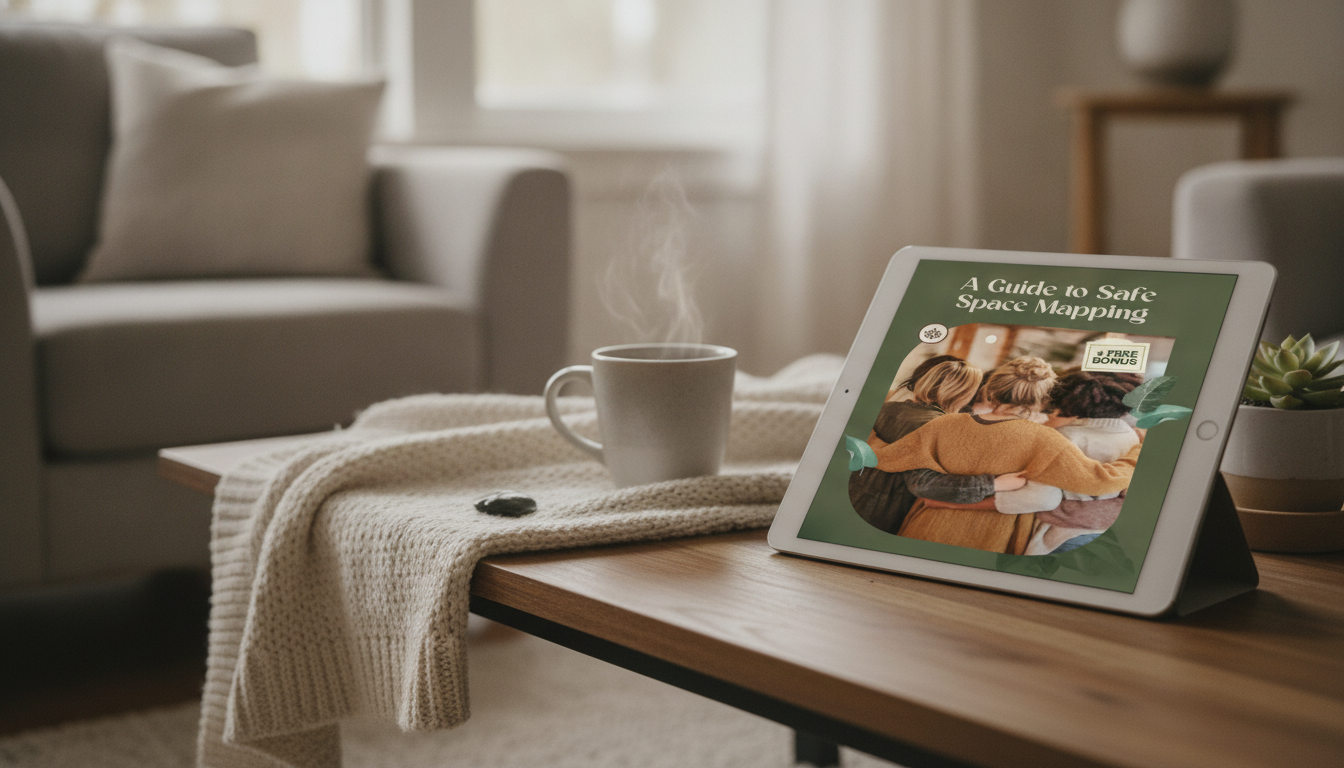
- A Guide to Safe Space Mapping | Digital Ebook on Understanding, Creating & Using Safe Spaces (digital download)
- Whole You: Holistic Wellness Guide | Beginner Wellness Ebook (helps pair safety planning with daily wellness routines)
- Confident Kids Bundle: Nurturing Emotional Strength | 3-in-1 Bundle (supportive for families building calmer norms and emotional skills)
Keeping the practice going: updating and measuring progress
FAQ
Is a safe space map only for people with trauma histories?
No. Anyone can benefit from mapping because it improves planning, boundaries, and emotional regulation—especially during busy seasons, transitions, or high-stakes environments.
How often should a safe space map be updated?
A weekly check-in works well when life is changing quickly, and a monthly review is often enough during stable periods. Update it after major events (new job, move, relationship change) and focus on small adjustments rather than starting over.
What if no place feels fully safe right now?
Start with partial safety and “micro-safe” moments—one supportive person, one predictable routine, one exit plan. If there’s immediate risk or ongoing harm, prioritize professional support and a formal safety plan.










Leave a comment