Printable SMART Goal Planner: Weekly System That Works
Clear Goals, Real Follow-Through: A Practical System That Fits on Paper
Goals get easier to achieve when they stop living in your head and start living in a simple, repeatable planning system. When you write a goal down, define what “done” looks like, and review it weekly, you reduce guesswork and increase follow-through—especially when life gets busy. The approach below combines outcome-based goal selection, SMART commitments, and printable planning pages that keep progress visible from week one through completion.
Start With Outcomes That Actually Matter
Before choosing tactics, choose outcomes. A strong outcome gives you a reason to show up on the days motivation is low.
- Pick 1–3 priority areas (career, health, money, learning, relationships) to avoid scattered effort and constant context switching.
- Describe the outcome in plain language: what “done” looks like, how daily life improves, and what changes you’ll notice.
- Check alignment: if a goal supports current responsibilities and values, it requires less willpower to maintain.
- Set a realistic time horizon (30 days, 90 days, 6 months) based on complexity, available time, and energy.
A helpful gut-check: if the goal sounds impressive but doesn’t change anything meaningful in your day-to-day, it’s probably not the right target right now.
Turn Any Goal Into a SMART Commitment
SMART goals work because they replace vague intention with a clear commitment you can measure. If you want a deeper overview of goal-setting fundamentals, Mind Tools offers a solid reference: Goals and Goal Setting (Mind Tools).
- Specific: replace “get fit” with something observable like “complete 12 strength sessions in 4 weeks.”
- Measurable: choose 1–2 metrics (sessions, pages, dollars saved, hours practiced) and define a weekly minimum.
- Achievable: match difficulty to current capacity. Stretch is good; constant overwhelm creates inconsistency.
- Relevant: connect the goal to a personal reason you can reread when you’re tired or distracted.
- Time-bound: set a deadline, then add checkpoints so you’re not relying on a last-minute push.
One small upgrade that improves consistency is to add “when” and “where” to your plan (often called implementation intentions). The APA’s overview of the concept is a useful starting point: Implementation Intentions (APA Dictionary of Psychology).
Build the Goal Map: Milestones, Tasks, and Support Systems
Motivation fades; structure holds. A “goal map” converts a target into steps you can actually complete on a Tuesday afternoon.
- Break the goal into milestones and tasks: milestones are major checkpoints; tasks are weekly/daily actions that move you forward.
- Identify constraints early: time, budget, energy, skill gaps, and competing commitments. Planning around constraints beats planning as if they don’t exist.
- Add support systems: reminders, an accountability partner, scheduled focus blocks, and small environment tweaks (like keeping tools visible).
- Create “if-then” plans: decide in advance what you’ll do if travel, deadlines, or low energy hits so one off-week doesn’t become a full stop.
Example: “If I miss my Tuesday workout, then I’ll do a 20-minute session Thursday morning before checking email.” That single sentence protects momentum.
Printable Pages That Keep Progress Visible
Printable planning works well because it’s fast to review and hard to ignore. The goal is not to build a perfect planner; it’s to build a simple feedback loop.
- Use one “goal snapshot” page to hold the SMART statement, why it matters, and key metrics.
- Plan weekly with a short list of highest-impact actions tied to milestones (not a sprawling wish-list).
- Track habits with checkmarks; review patterns rather than judging individual off-days.
- Close each week with a quick reflection: wins, obstacles, and the next adjustment.
Common Planner Pages and What They’re For
| Page | Best use | How often |
|---|---|---|
| SMART goal worksheet | Clarify the target, metric, deadline, and relevance | Once per goal (refresh if the goal changes) |
| Milestone map | Split the goal into 3–6 checkpoints to reduce overwhelm | Once per goal, then review monthly |
| Weekly plan | Choose 3–7 priority actions tied to milestones | Weekly |
| Daily focus block | Schedule 1–3 deep-work sessions and protect them | As needed (daily or 3–5x/week) |
| Habit tracker | Reinforce consistent behaviors that drive results | Daily, reviewed weekly |
| Weekly review | Notice what worked, adjust targets, and reset priorities | Weekly |
A Simple Weekly Routine That Sticks
Consistency comes from a routine that’s short enough to keep and structured enough to guide decisions.
How to Choose the Right Printable Goal Planner
- Decide your planning style: structured worksheets provide clarity; open templates provide flexibility.
- Match pages to the goal type: habits benefit from trackers; projects need milestones; performance goals need metrics.
- Confirm usability: print-at-home friendliness, clean layouts, and enough room for notes you’ll actually write.
- Choose a system with review prompts: reflection is what turns planning into better decisions.
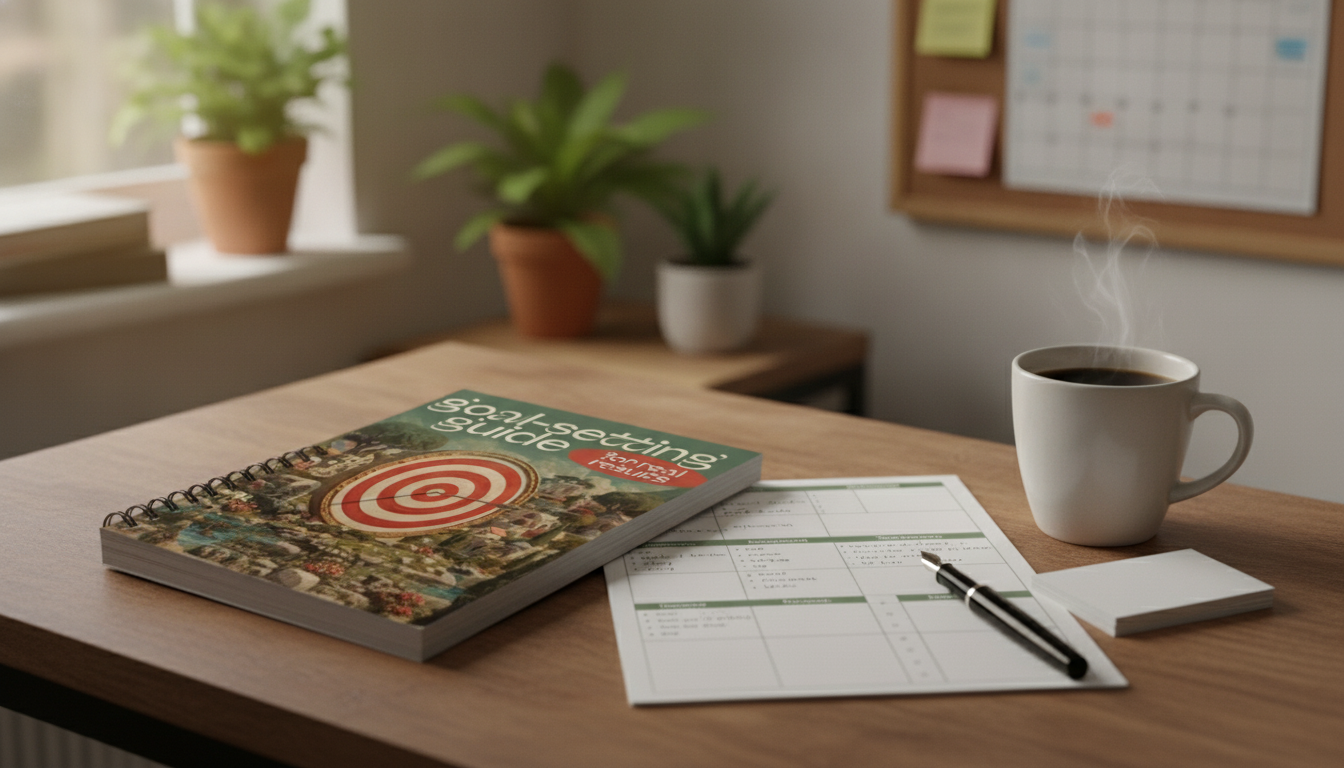
- For a ready-to-use set of worksheets and templates, see: Goal-Setting Guide for Real Results – Printable Goal Planner, SMART Goals Workbook & Productivity Template for Achievable Success.
Common Pitfalls and Quick Fixes
FAQ
How many goals should be worked on at the same time?
One primary outcome goal plus 1–2 supporting habits is usually the sweet spot. Fewer goals reduces decision fatigue and makes it easier to protect time for the actions that actually move the needle.
What if a SMART goal stops feeling realistic mid-way?
Adjust the plan without abandoning the goal: revise the timeline, reduce weekly targets, or change the metric to match your current capacity. Keep the next action small and scheduled so momentum stays intact.
Do printable planners work if everything else is digital?
Yes—hybrid setups often work best. Print the goal snapshot and weekly plan for visibility, keep detailed notes digitally, and use calendar reminders to protect your scheduled focus blocks.












Leave a comment