Pack Light With a Minimalist Travel Packing Planner
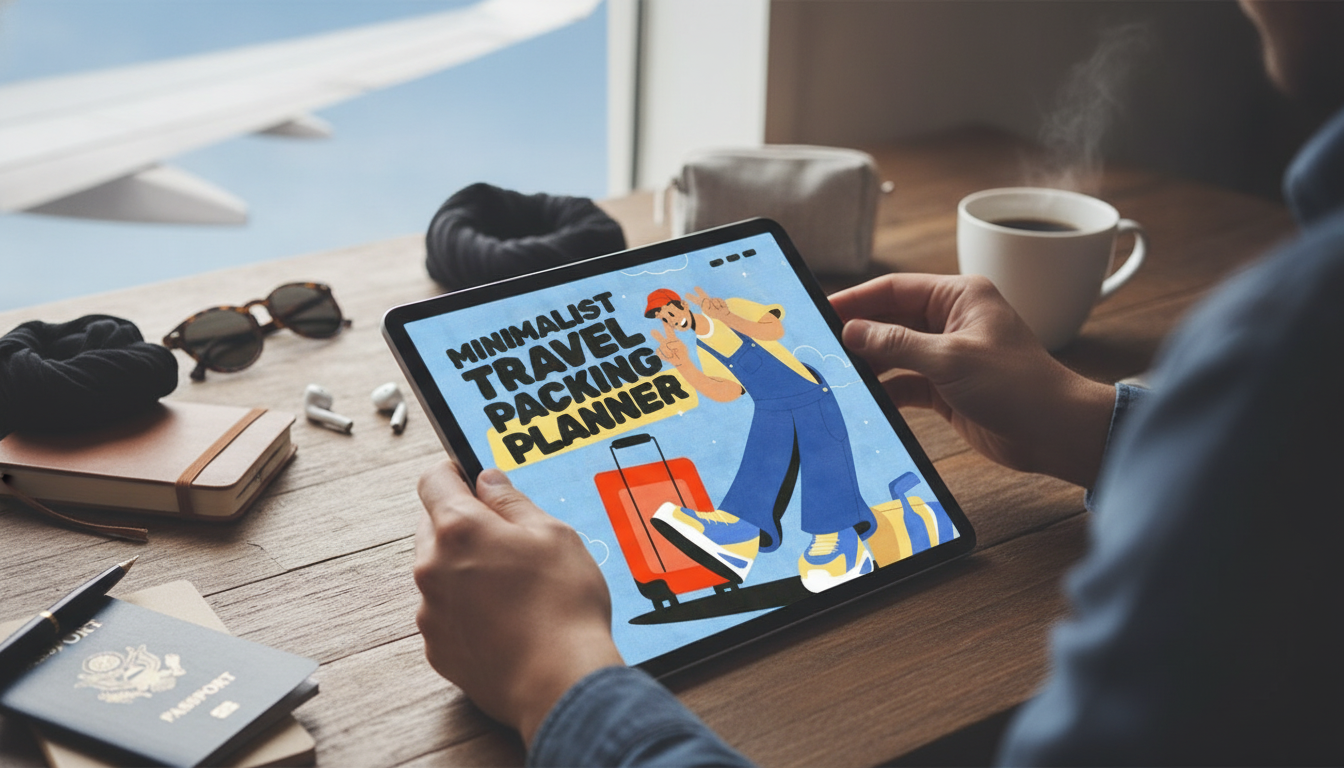
Minimalist Travel Packing Planner: Pack Light, Stay Organized, Travel Calm
Packing doesn’t have to mean overstuffed bags and last-minute panic. A minimalist packing plan keeps essentials clear, reduces decision fatigue, and helps every item earn its place—so trips feel lighter from departure to return.
Why minimalist packing works for real trips
Minimalist packing isn’t about depriving yourself; it’s about building a repeatable system that makes travel smoother. When the same few steps work for weekend getaways, work trips, and longer vacations, the mental load drops fast.
- Reduces stress by replacing scattered to-do lists with a single, repeatable system
- Cuts baggage weight and bulk while keeping comfort and flexibility
- Lowers the chance of forgetting essentials by using checklists tied to trip details
- Makes transitions easier: airport days, hotel changes, day trips, and quick repacks
- Supports smarter spending by highlighting what’s already owned versus what’s truly needed
Start with trip variables, not items
Most overpacking happens when you start with “What might I need?” instead of “What is this trip actually like?” Begin with the variables that change everything, then let the list follow.
- Define trip length, climate range, and laundry access (sink wash, laundromat, hotel service)
- Clarify trip style: business, city break, outdoor, family, mixed itinerary
- Choose luggage limit first: personal item only, carry-on, or checked bag
- Set a simple capsule rule: one main color family, two accent colors, and mix-and-match layers
- Decide shoe strategy early (often the bulkiest category): wear the heaviest pair in transit
Trip variables that change the packing list
| Trip variable | What it changes | Minimalist default |
|---|---|---|
| Temperature swing | Layer count, outerwear choice | Light mid-layer + packable shell |
| Laundry access | Number of outfits needed | 3–5 day rotation + wash plan |
| Activity intensity | Footwear and fabrics | One versatile shoe + one activity-specific (if required) |
| Work/social events | Dressier pieces | One elevated outfit + accessories |
| Accommodation type | Toiletries and extras | Decant essentials; skip duplicates |
A light, smart packing framework (the 5-bucket method)
A minimalist packing planner works best when it groups decisions into a few “buckets.” This prevents the common spiral of adding random extras because your list feels incomplete.
- Bucket 1: Core clothing (tops, bottoms, layers) built around a small capsule
- Bucket 2: Underlayers (underwear, socks, sleepwear) sized to laundry cadence
- Bucket 3: Footwear + accessories (belt, hat, scarf) chosen for multi-use
- Bucket 4: Toiletries + health (decants, meds, basics) kept TSA-friendly when relevant
- Bucket 5: Tech + documents (chargers, adapters, IDs) stored in a single grab pouch
- Add a small “buffer” rule: only 10–15% of the bag for “nice-to-have” items
If you’re flying, keep liquids simple and compliant with the TSA 3-1-1 liquids rule to avoid last-second repacking at security.
Use a digital planner to prevent overpacking
Digital planning is especially helpful because it encourages a “one list per trip” approach—and makes it easier to reuse what already works. The goal is to make the right decisions once, then copy and refine.
- Pre-trip checklist reduces last-minute shopping and duplicate packing
- Category-based lists reveal where extras hide (too many tops, backup cosmetics, spare gadgets)
- Outfit planning helps re-wear strategy: base pieces repeat; accessories rotate
- A printable or digital format makes it easy to reuse for weekend, weeklong, or extended travel
- Create a “packing boundary”: when the list is done and the bag closes comfortably, stop
For international trips or destinations with fast-changing conditions, a quick check of U.S. Department of State Travel Advisories and the CDC Traveler’s Health pages can help you pack smarter (for example, necessary meds, documentation, or basic prevention supplies).
How to choose a minimalist travel packing planner
Not every “packing checklist” helps you pack lighter. The best minimalist travel packing planner is built to reduce choices, not create more of them.
- Look for modular sections: trip overview, clothing capsule, toiletries, tech, documents, and last-minute checks
- Prioritize reusability: templates that work for different trip lengths and seasons
- Choose a planner that supports outfit planning, not just item counting
- Make sure it matches the tools actually used (phone/tablet, PDF, printable pages, notes app compatibility)
- Prefer a clean, uncluttered layout that discourages adding “just in case” items
- Bonus features that help: laundry schedule, souvenir space, and a return-home unpack checklist
If you like pairing packing with a simple pre-departure routine (bookings, timelines, and personal reminders), a companion planner can keep the planning side as streamlined as the suitcase. A helpful option is the Goal-Setting Guide for Real Results – Printable Goal Planner, SMART Goals Workbook & Productivity Template for Achievable Success, which can be repurposed to map trip tasks into a quick, trackable checklist.
What’s included in a minimalist packing plan (sample list starter)
Use this as a baseline, then adjust based on your trip variables. The goal is to pack for what you’ll do most days, not for every unlikely scenario.
Quick routines for stress-free packing day
Recommended digital tool for repeatable light packing
FAQ
How many outfits are enough for a weeklong trip?
A 3–5 day rotation is usually enough when you plan for laundry (sink wash or a quick laundromat stop). Build around mix-and-match layers and re-wearable bottoms so you can repeat core pieces without feeling repetitive.
How can overpacking be avoided without forgetting essentials?
Start from trip variables (weather, activities, laundry), then use category checklists so essentials don’t get buried under extras. Keep “nice-to-have” items within a small buffer space so they can’t take over the bag.
What should always go in a personal-item bag?
Keep documents, wallet, phone/charger, medications, one warm layer, and a small hygiene kit within easy reach. Storing these in a single grab pouch makes security checks and in-transit transitions much calmer.







Leave a comment