Imaginative PDF Storybook for Kids That Teaches Life Skills
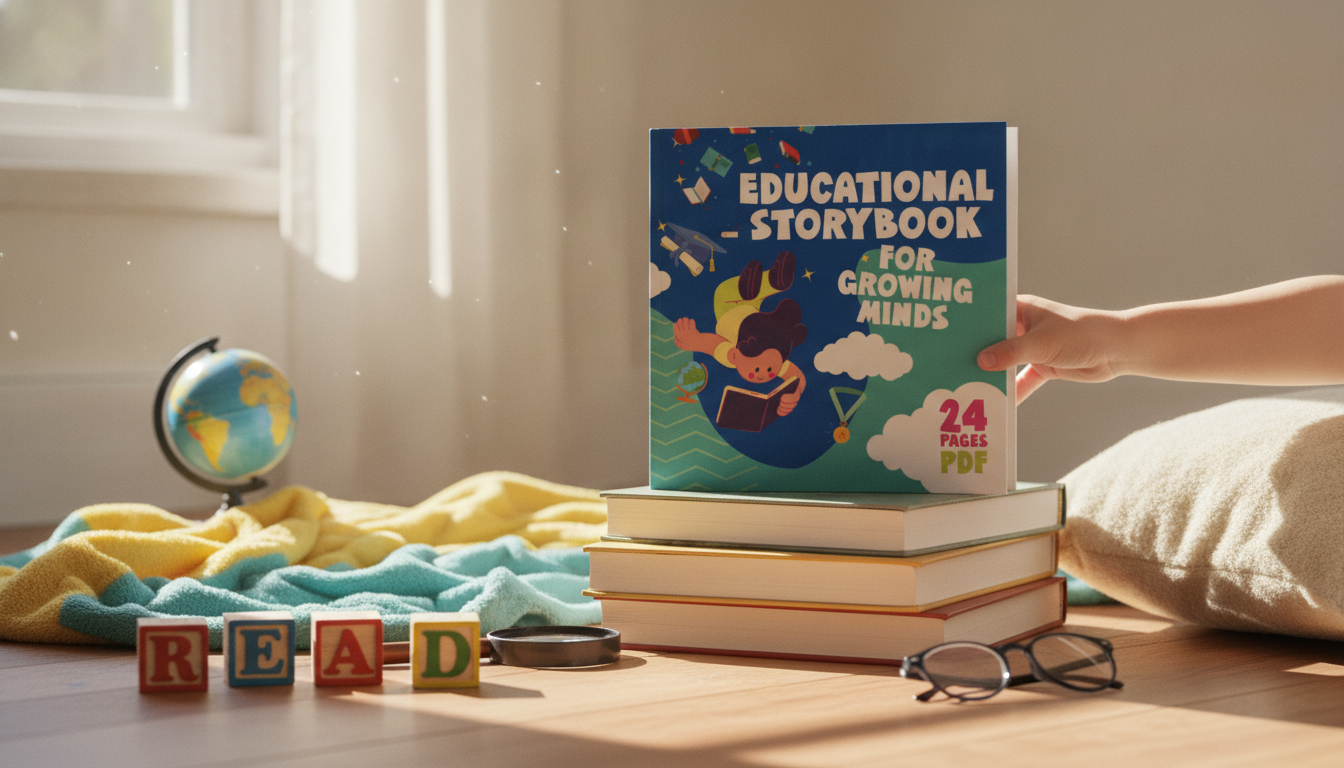
Educational Storybook for Growing Minds: Imaginative Tales That Teach
Designed for curious kids who love stories, this digital story collection blends playful imagination with gentle lessons that support learning at home or on the go. With a PDF download format, it’s easy to use for bedtime reading, quiet time, or a quick “one more story” moment—without needing shipping or waiting. The best part: each tale offers a kid-friendly situation that naturally opens the door to conversation, reflection, and skill-building. For more guidance, see Parent–child shared book reading challenges and facilitators – PMC.
Reading together also strengthens language and connection. Organizations that focus on children’s development regularly emphasize the value of shared reading for early learning and family bonding, including the American Academy of Pediatrics and literacy education resources like Reading Rockets. For further reading, see Free Children’s Books – Stories, ebooks, textbooks, and much more.
What’s Inside the Story Collection
- A set of imaginative stories built around everyday kid-friendly situations and big feelings
- Clear, age-appropriate takeaways that can be discussed after each story
- A digital PDF format that works well for tablets, laptops, or printing selected pages
- A consistent structure that helps kids anticipate patterns and follow plot events
That predictable rhythm—setup, challenge, choice, and outcome—helps children follow along without feeling lost. It also makes rereading more rewarding, because kids can focus on new details each time: a character’s emotions, a turning point, or a better solution they notice on a second pass.
Why Stories With Lessons Work So Well for Kids
- Stories create emotional distance, making it easier for kids to explore choices and consequences safely
- Repeated themes help children practice the same skill across different situations (sharing, patience, honesty, resilience)
- Discussion after reading strengthens comprehension and helps kids connect story events to real life
- Short story sessions can build a dependable reading routine, supporting language growth over time
Story Benefits and How to Use Them
| Benefit | What Kids Practice | Simple Follow‑Up Prompt |
|---|---|---|
| Cause and effect | Understanding outcomes | “What happened because of that choice?” |
| Vocabulary growth | New words in context | “Can you use that word in a new sentence?” |
| Emotional literacy | Naming feelings | “How did the character feel, and why?” |
| Problem-solving | Trying helpful strategies | “What else could they have tried?” |
Ways to Use a Digital PDF Storybook at Home
- Bedtime routine: one story + one question to end on a calm, connected note
- Morning warm-up: a short story before school to set a positive tone
- Quiet-time activity: independent reading for confident readers or read-aloud for younger kids
- Print a few favorites: create a mini binder of “top stories” for repeat reading
- Travel-friendly option: keep the PDF on a device for waiting rooms, flights, or road trips
Digital format is especially helpful when life gets busy. A familiar story can fill ten minutes in a productive way—without setting up a big activity. And if your child loves to return to the same favorite tale (again and again), that repetition isn’t “stuck”—it’s practice.
Skills Kids Can Practice Through Imaginative Reading
- Reading comprehension: recalling details, sequencing events, and predicting outcomes
- Social skills: empathy, cooperation, listening, and respectful communication
- Self-management: patience, coping with disappointment, trying again after mistakes
- Critical thinking: noticing patterns, weighing options, and explaining reasoning
- Creativity: imagining alternate endings, inventing new characters, and storytelling play
Even a short story can become a mini “practice space” for real life. When kids talk about what a character should do, they’re quietly building their own toolbox for handling everyday moments—like sharing a toy, dealing with a mistake, or asking for help.
How to Choose the Right Story Collection for Your Child
- Match attention span: choose stories that fit the child’s typical focus time (shorter is often better for consistency)
- Look for relatable themes: friendship, honesty, courage, kindness, responsibility, and emotional regulation
- Check discussion friendliness: stories that invite “why” and “what would you do” questions support deeper learning
- Consider reading flexibility: PDF collections are useful when a caregiver wants both screen reading and optional printing
- Prioritize re-read value: kids learn through repetition—favorites are a feature, not a flaw
If your child is between stages (can read some words but tires quickly), look for stories that work well both as a read-aloud and as an “I’ll read a page, you read a page” shared experience. That back-and-forth keeps momentum without turning reading into a chore.
A Simple After-Story Routine That Builds Understanding
- Ask one recall question: “What happened first?”
- Ask one feelings question: “How did the character feel?”
- Ask one choice question: “What could they do next time?”
- Keep it light: brief conversations often work better than long quizzes
- Celebrate effort: focus on thoughtful answers rather than “perfect” ones
Pairing Reading Time With Goal Habits (Optional Add‑On)
To support that kind of routine at home, pair reading with a simple tracker like the Goal-Setting Guide for Real Results – Printable Goal Planner, SMART Goals Workbook & Productivity Template for Achievable Success. A small weekly goal—plus a visual checkmark—can help kids feel capable and motivated without turning storytime into a scoreboard.
FAQ
How does the digital download work?
After purchase, you receive a PDF file delivered digitally. You can read it on common devices (tablet, laptop, or phone) and optionally print pages for personal use at home.
What ages is this story collection best for?
It typically fits early elementary through upper elementary ages. Younger kids can enjoy it as a read-aloud, while stronger readers can use it for independent reading and practice.
Can the stories be used for learning discussions at home?
Yes—each story works well with a simple three-step chat: ask one recall question, one feelings question, and one choice question. Keeping it brief helps kids stay engaged while still building understanding.










Leave a comment