Confident Kids Bundle: Emotional Skills for Ages 3–5
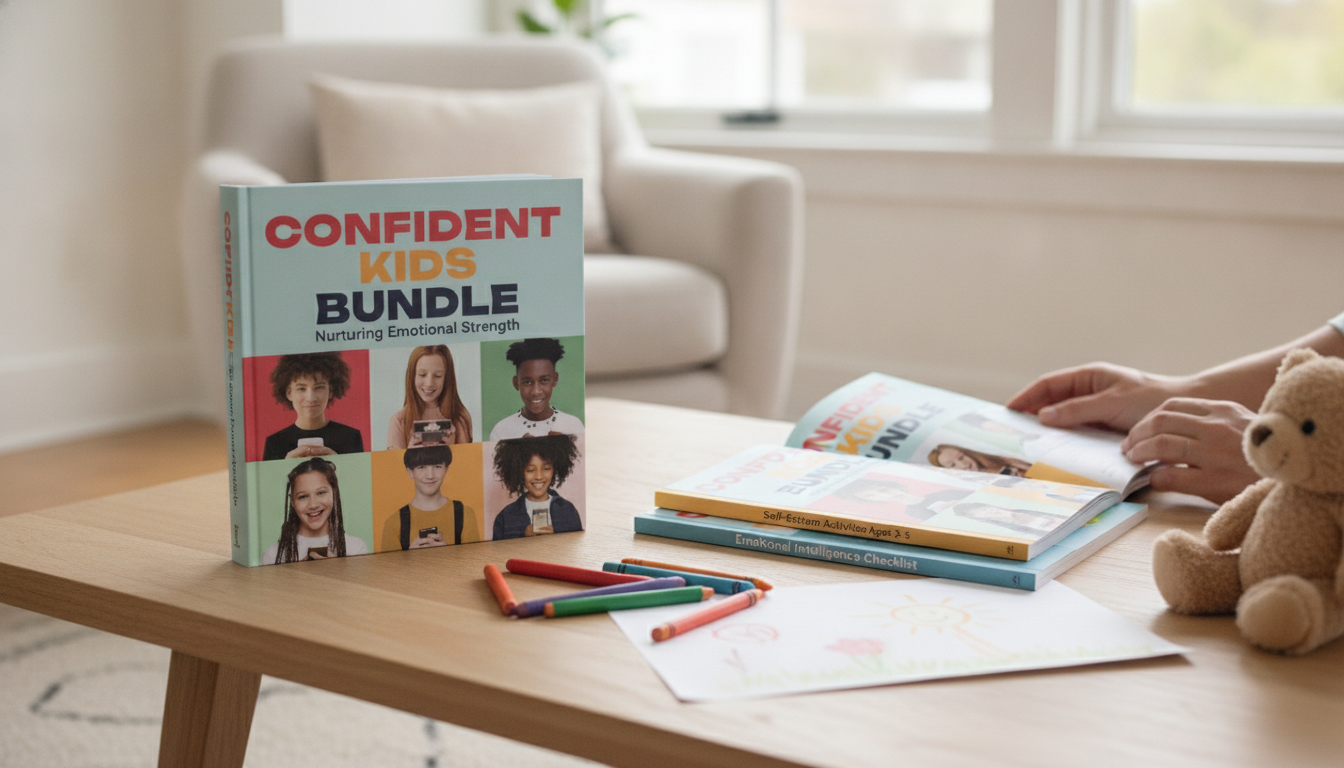
Confident Kids Bundle: Nurturing Emotional Strength for Ages 3–5
Early childhood is a high-growth window for learning how to name feelings, recover from big emotions, and build a steady sense of “I can do hard things.” The Confident Kids Bundle brings three practical pieces together—parenting guidance, play-based self-esteem activities for ages 3–5, and a simple emotional intelligence checklist—so daily routines can become small, repeatable moments of confidence-building.
What the Confident Kids Bundle Includes
This 3-in-1 set is designed to support emotional strength at home and in early learning settings. Instead of relying on perfect parenting “in the moment,” it gives caregivers clear language and short, repeatable routines that preschoolers can actually absorb.
- Parenting guide: strategies for coaching emotions, setting boundaries with warmth, and responding to challenging behavior without shaming.
- Self-esteem activities (ages 3–5): short, playful prompts that reinforce effort, autonomy, and problem-solving.
- Emotional intelligence checklist: an at-a-glance tool to notice progress (and gaps) in skills like naming feelings, calming down, empathy, and repair after conflict.
- Helpful across settings: useful for caregivers, preschool teachers, and therapists seeking consistent language and routines.
Bundle Components at a Glance
| Part of the bundle | Best used for | Typical moment to use it | What it helps build |
|---|---|---|---|
| Parenting guide | Caregiver responses and consistent routines | Tantrums, transitions, sibling conflict, bedtime | Emotional safety, boundaries, co-regulation |
| Self-esteem activities (Ages 3–5) | Play-based confidence practice | Morning routine, after preschool, weekend play | Autonomy, persistence, positive self-talk |
| Emotional intelligence checklist | Tracking skills over time | Weekly check-in or monthly review | Awareness, empathy, coping skills, repair |
Why Emotional Strength Matters at Ages 3–5
Preschoolers feel emotions fast and loud partly because self-control skills are still under construction. According to the CDC’s developmental milestones, this period includes major growth in communication, social skills, and self-management—exactly the building blocks kids draw on when they’re disappointed, jealous, scared, or overwhelmed.
- Frequent big feelings are normal: impulsivity and intense reactions often show up before children can reliably slow down and choose a tool.
- Confidence needs both comfort and limits: kids do best when they feel understood and still held to clear boundaries.
- Naming feelings supports better behavior: giving language to internal states reduces “act it out” moments.
- Repair builds resilience: apologizing, reconnecting, and trying again teaches sturdiness more than perfection.
- Healthy self-esteem is grounded in competence: praising effort, strategies, and perseverance helps kids trust themselves without needing to be “the best.”
How to Use the Bundle in Daily Life (Without Adding More to the Day)
Emotional skills stick when they’re woven into routines that already happen. The goal isn’t a long lesson; it’s a short rhythm that repeats often enough to become familiar.
- Choose one routine (morning, mealtime, car rides, bedtime) and use the same two or three feeling words daily (for example: “mad,” “sad,” “worried”).
- Try a quick co-regulation script: notice → name → normalize → limit → next step. (“I see your fists. You’re mad. It’s okay to be mad. It’s not okay to hit. Let’s stomp twice and try again.”)
- Keep activities short (3–10 minutes): stop while your child is still engaged so confidence ends on a win.
- Post the checklist for adults: keep it where caregivers can see it, not where it turns into a “scorecard” for the child.
- Consistency beats intensity: small practice every day tends to outperform occasional long sessions.
Self-Esteem Activities That Work Best for Preschoolers
Preschool confidence grows through safe independence: small choices, gentle challenges, and steady feedback about effort. Activities work best when they are concrete, playful, and repeatable.
Using an Emotional Intelligence Checklist to Notice Progress
Common Challenges and Simple Fixes
How to Choose the Right Emotional Skills Resource
- Match the age range: preschoolers need concrete language, visual cues, and short practice windows. Guidance from HealthyChildren.org (American Academy of Pediatrics) emphasizes everyday routines and responsive adult support as key to social-emotional growth.
- Look for comfort plus limits: validation paired with clear boundaries prevents permissive patterns and helps kids feel safe.
- Prefer repeatable routines: confidence grows through repetition, not one-off printables.
- Choose caregiver scripts: the most useful tools include what to say during tantrums, aggression, or shutdown.
- Tracking should feel supportive: observational checklists help adults notice progress without turning development into a grade.
A Helpful Add-On for Older Kids and Parents
Goal-Setting Guide for Real Results is a printable planner that helps turn “I want to do better” into clear, doable steps, making progress easier to see and celebrate.
FAQ
What age is the Confident Kids Bundle best for?
It’s designed for ages 3–5, when kids benefit most from concrete feeling words, short practice, and playful repetition. For younger children, lean more on visuals and pointing; for older kids, add simple reflection questions like “What could we try next time?”
How long does it take to see improvements in emotional regulation?
With consistent routines, early changes often show up within a few weeks as faster recovery, fewer escalations, and more attempts to use words. Progress tends to come in waves, so steady repetition and supportive environments matter.
What if a child refuses calming strategies in the moment?
Practice calming tools when your child is already calm, offer limited choices (“breaths or a squeeze ball”), and model co-regulation instead of forcing a technique mid-tantrum. After the storm, return to repair and briefly rehearse what to try next time.











Leave a comment