Cat Body Language Cheat Sheet: Read Feline Signals
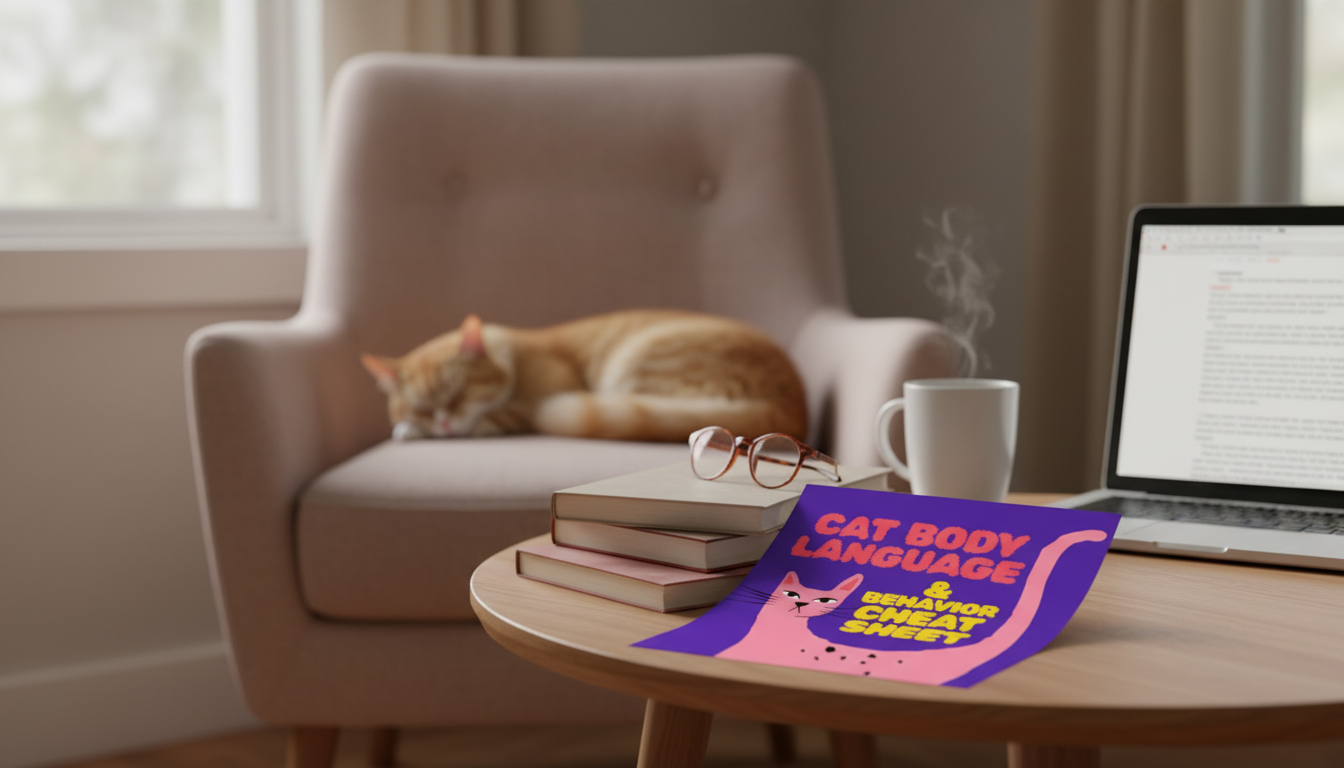
Cat Body Language & Behavior Cheat Sheet: A Practical Guide to Feline Signals
Cats communicate constantly through posture, tail motion, ear position, facial tension, and vocal patterns. A few small changes—like a slow blink, a tucked tail tip, or sideways ears—can reveal comfort, caution, overstimulation, or fear. This guide organizes common signals into easy categories and shows how to respond in ways that build trust and prevent bites, scratches, and stress.
How Cats Communicate: Signals That Work Together
Most feline “messages” are multi-part. A single meow or a single tail flick rarely tells the whole story; what matters is the cluster of signals happening at the same time.
- Look for combinations: ears + tail + posture + eyes typically tell a clearer story than any one cue alone.
- Let context do its job: a puffed tail during rough play can look dramatic, but a puffed tail after a loud bang usually means alarm.
- Distance is communication: approaching, pausing, retreating, and “orbiting” around a person can all be intentional choices.
- When unsure, lower the pressure: reduce stimulation, slow your movements, and offer space instead of reaching in.
For deeper behavior standards and handling recommendations, see the American Association of Feline Practitioners (AAFP) Feline Behavior Guidelines.
Face and Eyes: Soft, Staring, and Everything Between
The face is one of the most honest “tell” zones because it’s difficult for cats to mask tension around the eyes, whiskers, and mouth.
- Slow blink / half-closed eyes: often means comfort. Returning a slow blink can de-escalate excitement and keep greetings polite.
- Hard stare with a still body: can be a challenge, a freeze response, or worry. When tension is in the air, soften your gaze and angle your body sideways.
- Dilated pupils: may indicate excitement, fear, or high arousal—confirm by checking ear position and muscle tension.
- Whiskers forward: curiosity or hunting focus. Whiskers pinned back: stress, irritation, or a “please stop” moment.
- Lip licking, yawning, head turns: can be displacement behaviors that suggest unease rather than sleepiness.
Ears: The Fastest Mood Meter
Ears shift quickly—often before a bite, swat, or dash. Noticing transitions early is one of the easiest ways to prevent trouble.
- Forward ears: interest, engagement, friendly attention.
- Neutral ears: relaxed awareness (especially when paired with a loose body).
- Swiveling “radar” ears: alertness or uncertainty. Pause and let the cat decide whether to approach.
- Sideways “airplane” ears: discomfort or overstimulation; end petting and give space.
- Flattened ears: fear or defensive aggression; don’t corner, grab, or hover.
Tail and Posture: Confidence, Curiosity, and Caution
The tail is a volume knob for emotion—subtle changes in the tip and speed matter just as much as the overall position.
- Tail upright with a relaxed tip: friendly confidence; a slight hook at the end often reads like a greeting.
- Tail tucked close: insecurity or fear; avoid forced contact and offer a quiet escape route.
- Fast thrashing: agitation. Stop petting, reduce noise, and give the cat a chance to reset.
- Puffed tail: alarm. Increase distance and remove the trigger if possible.
- Crouched posture + tense muscles: could precede a dart away or a defensive reaction.
- Belly-up: can mean trust, but not always permission for belly rubs; look for loose limbs and a soft face.
| Signal | Common Meaning | Helpful Response |
|---|---|---|
| Slow blink | Relaxed, affiliative | Slow blink back; speak softly; let the cat approach |
| Ears sideways | Uncomfortable/overstimulated | Pause petting; give space; reduce handling |
| Tail tip twitch | Arousal/irritation building | End interaction before escalation; offer a toy instead |
| Body crouched + wide eyes | Fear/uncertainty | Back up; avoid direct stare; provide hiding spot |
| Purring + tense body | Not always content (could be self-soothing) | Check for stressors; keep interaction gentle and brief |
Meows, Trills, and Other Sounds: What to Listen For
- Meowing: often directed at people; many cats “talk” more with humans than with other cats.
- Short meows: greetings or requests. Repeated urgent meows: frustration, stress, or unmet needs.
- Trills/chirps: friendly approach or an invitation to follow—often toward food, a toy, or a favorite spot.
- Growling, hissing, spitting: distance-increasing signals. Back away and remove pressure.
- Yowling: may relate to mating behavior, pain, disorientation, or territorial stress; look for patterns and triggers.
More examples of common feline signals can be found at International Cat Care and the ASPCA cat behavior resources.
Common Scenarios and Safer Responses
Petting turns to biting
Watch for tail flicks, skin ripples, ears turning sideways, and a sudden “stiffer” body. Stop before the bite and redirect to play (a wand toy creates space while burning energy).
Hiding under furniture
Dragging a cat out increases fear and makes future hiding more intense. Offer a quiet room, a predictable routine, and a slow reintroduction to household activity.
Doorway standoffs between cats
Nighttime zoomies
Carrier panic
When Body Language Signals a Health or Stress Problem
How to Choose a Printable Cat Communication Cheat Sheet
Printable Reference: Daily Use Tips
If you like keeping routines consistent, a printable planner can also help track play sessions, feeding times, and behavior notes day-to-day: Cat Body Language & Behavior Cheat Sheet (Printable Cat Communication Guide).
FAQ
Why does a cat purr when it seems anxious or in pain?
Purring can signal contentment, but it can also be self-soothing during stress or discomfort. If purring comes with hiding, lethargy, appetite changes, or sudden behavior shifts, a veterinary check is a smart next step.
Is a belly-up cat asking for a belly rub?
Not always—belly-up can show trust or it can be a defensive setup. Look for loose limbs and a soft face, and when in doubt, stick to cheek or head pets and stop if the tail flicks or ears turn sideways.
What does tail flicking mean during petting?
A small tail-tip twitch can mean arousal is building, while full thrashing usually signals agitation. Pause petting, shorten sessions, and redirect to play to prevent overstimulation bites.









Leave a comment