Memory Boost Worksheets: Printable + Digital Recall Drills
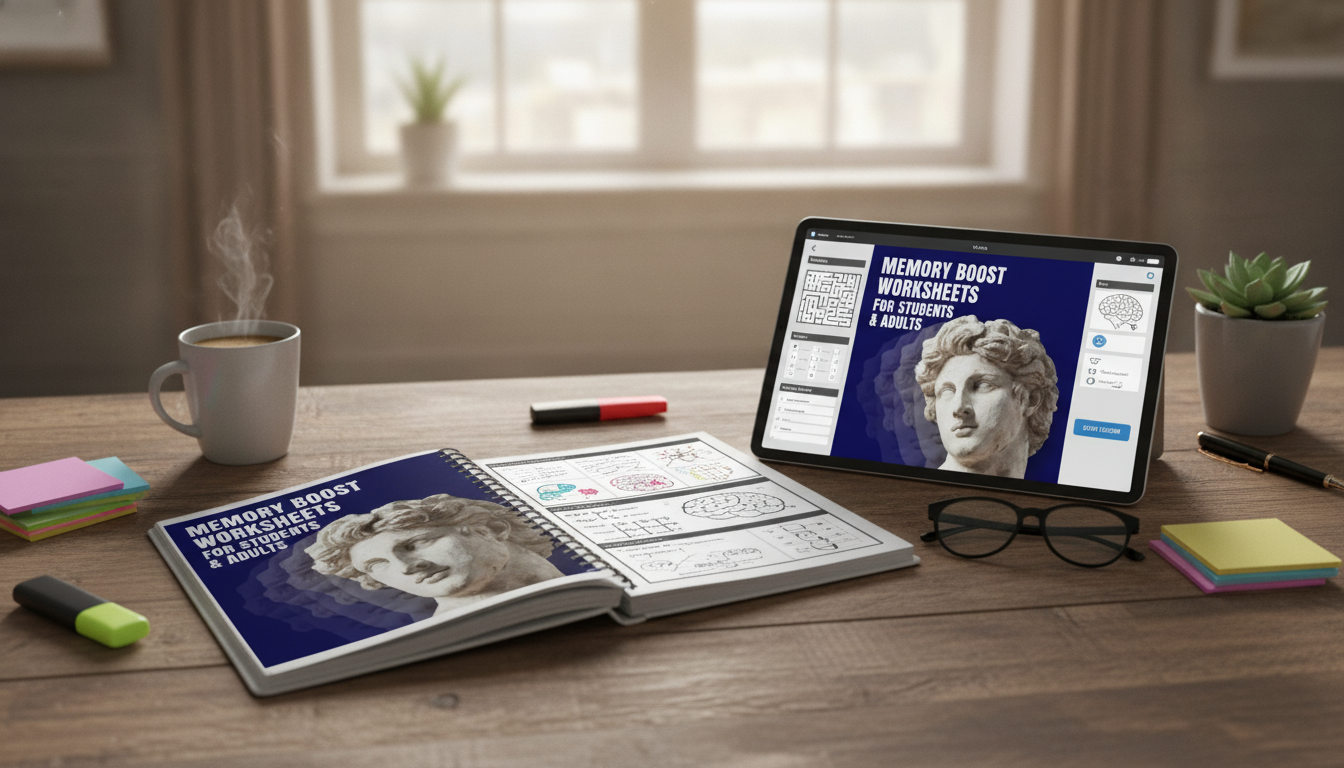
Memory Boost Worksheets for Students & Adults (Printable + Digital Download)
A structured set of memory-training worksheets can make recall feel less like guesswork and more like a repeatable skill. This printable and digital download is designed for students, busy adults, and lifelong learners who want practical exercises, study tools, and proven memory techniques that fit into real schedules—at home, in class, or at work.
Instead of relying on rereading or highlighting, the worksheets steer practice toward retrieval, spacing, and better cues—methods supported by cognitive science, including the “testing effect” (retrieval practice) described by the American Psychological Association. If you want a simple way to make review sessions more effective, these pages turn good intentions into a concrete routine.
What’s included in the download
- A brain-training workbook format that blends short drills with longer recall activities to build consistency without burnout.
- Study and recall tools that guide learners from first exposure (notes/reading) to retention (practice) to retrieval (testing).
- Memory technique prompts that help convert information into cues: imagery, association, chunking, and structured review plans.
- Worksheets suitable for individual use, tutoring sessions, classroom warmups, or adult skill-building routines.
- Printable pages for offline practice plus a digital-friendly option for tablet/desktop completion, depending on preference.
Quick guide to using the worksheets by goal
| Goal | Best worksheet focus | Time per session | How to measure progress |
|---|---|---|---|
| Remember study material | Active recall prompts + spaced review plan | 10–25 min | Quiz yourself after 24 hours and again after 7 days |
| Improve daily memory | Association drills + name/number practice | 5–15 min | Track fewer missed details (appointments, lists, names) |
| Boost focus under pressure | Short timed exercises + distraction control checklist | 5–10 min | Complete tasks with fewer pauses and re-reads |
| Prepare for tests | Mixed retrieval sets + error log | 20–40 min | Rising scores and fewer repeated mistakes |
Who these worksheets are designed for
- Students who need a repeatable method for remembering vocabulary, definitions, formulas, dates, and reading comprehension details.
- Adults who want sharper day-to-day recall for names, tasks, instructions, and work-related learning.
- People who learn best through doing: structured prompts, checklists, and guided practice rather than passive reading.
- Tutors, educators, and parents looking for ready-to-use exercises that make memory practice concrete and trackable.
- Anyone building better study habits who wants a simple system for review cycles, self-testing, and reflection.
How to use the worksheets as a simple weekly routine
- Start with a baseline: pick one topic (or one daily-life category like names/tasks) and complete a short initial recall check to see what sticks without help.
- Use short sessions: aim for 10–20 minutes most days rather than a single long session; consistency supports retention more reliably than cramming.
- Follow a retrieval-first pattern: attempt to recall before looking at notes, then correct, then re-test—this makes practice feel harder but builds stronger recall.
- Schedule spaced review: revisit the same material after a day, then a few days later, then a week later; adjust based on what you miss.
- Keep an error log: record what was forgotten and why (confusing terms, weak cues, rushed reading) and use that to choose the next worksheet focus.
- End with a 2-minute summary: write a brief explanation of what was learned in plain language; teaching-style summaries strengthen understanding and recall.
For extra support beyond the worksheets, practical lifestyle habits matter too—sleep, stress management, and attention. Harvard Health Publishing includes several evidence-informed strategies worth pairing with structured practice: Tips to improve your memory.
Memory techniques practiced inside the exercises
- Chunking: grouping details into smaller units so the brain has fewer separate items to manage during recall.
- Elaboration: adding meaning by linking new information to familiar ideas, examples, or experiences to create stronger retrieval paths.
- Visualization and association: turning abstract facts into images, stories, or paired cues that are easier to remember under pressure.
- Active recall: frequent low-stakes self-testing that trains retrieval rather than recognition.
- Spaced practice: revisiting information over time to reduce rapid forgetting and increase long-term retention.
- Interleaving (when appropriate): mixing related topics to improve discrimination and flexible recall, especially for problem-solving subjects.
How to Choose the Right Memory Worksheet Set
Ways to fit it into school, work, and everyday life
Product details at a glance
Download overview
| Item | Format | Primary use | Ideal setting |
|---|---|---|---|
| Memory Boost Worksheets for Students & Adults | Printable + digital | Memory practice + recall training | Home, classroom, tutoring, office |
Optional add-on for follow-through (in stock)
If consistency is the biggest hurdle, pairing memory practice with a clear weekly plan can make sessions easier to start and easier to track. The Goal-Setting Guide for Real Results – Printable Goal Planner, SMART Goals Workbook & Productivity Template for Achievable Success can help map review blocks, set short targets (like “two retrieval sets per week”), and keep momentum when schedules get busy.
FAQ
How long does it take to notice improvement?
Small wins often show up within 1–2 weeks when you do short sessions consistently. Bigger gains usually appear over 4–6 weeks when you follow spaced review and active recall, tracking missed items and re-testing after 24 hours and again after 7 days.
Are these worksheets better for studying or everyday memory?
They work for both: students can use them for test prep and retaining course content, while adults can use them for names, tasks, and work-related learning. Choose worksheet types based on the goal—cue-based prompts for studying and association drills for daily recall.
Can the digital version be used on a tablet?
Typically yes—download the file and fill it using a compatible PDF or notes app, or print pages if that’s easier. Testing one page first helps you decide whether digital entry or handwriting gives you better focus and retention.










Leave a comment