Critical Thinking eBook: Smarter Decisions & Brain Teasers

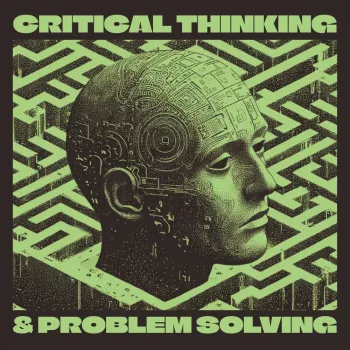
Critical Thinking & Problem Solving eBook (Digital Download): Smarter Decisions, Brain Teasers, and Practical Life Skills
Clear thinking is a learnable skill. The Critical Thinking & Problem Solving eBook – Digital Download is built to strengthen judgment, spot weak arguments, and solve everyday problems with more confidence. Instead of abstract theory, it uses structured frameworks, short drills, and brain teasers that help turn “good intentions” into repeatable decision habits—useful at work, in school, and in daily life, without requiring a background in logic or psychology.
To ground the approach in widely recognized research and definitions, the eBook aligns with the broader meaning of critical thinking as careful, reflective judgment (see APA Dictionary of Psychology: critical thinking) and draws on practical ideas that overlap with decision theory (see Stanford Encyclopedia of Philosophy: Decision Theory) and behavioral economics findings about how framing and risk can shift choices (see Kahneman & Tversky (1979): Prospect Theory).
What This eBook Helps Build
- A repeatable approach for defining problems before jumping to solutions
- Tools for evaluating claims, evidence, and common reasoning traps
- Step-by-step decision methods for high-stakes and time-limited situations
- Practice through brain teasers that strengthen pattern recognition and flexible thinking
- Transferable life skills: prioritization, trade-offs, risk awareness, and reflection
A Simple Model for Better Decisions
Many “bad decisions” start with a fuzzy goal, hidden constraints, and a rush to the first workable option. The eBook’s model is designed to slow things down just enough to choose deliberately—without turning every decision into a research project.
- Clarify the goal: write a one-sentence definition of what “success” looks like and by when
- List constraints: time, budget, values, safety, and non-negotiables
- Generate options: aim for at least 3 choices (including “do nothing” and a low-risk fallback)
- Gather evidence: separate facts, assumptions, and opinions; note what would change the decision
- Choose and commit: pick the option with the best overall trade-off, then define the next smallest action
- Review: after the outcome, capture one lesson and one improvement for next time
Quick Decision Worksheet (Copy/Paste)
| Step | Prompt | Example Fill-In |
|---|---|---|
| Goal | What outcome is needed? | Choose a training course that improves performance in 30 days |
| Constraints | What must be true? | Budget under $100; 2 hours/week; practical exercises |
| Options | What are 3+ viable paths? | Course A; Course B; self-study plan; postpone 2 weeks |
| Evidence | What supports each option? | Reviews, syllabus fit, time required, opportunity cost |
| Decision | Which option wins on trade-offs? | Course B due to practice labs and shorter modules |
| Next Action | What is the first step in 10 minutes? | Download syllabus and schedule first session |
| Review | What will be checked later? | After 2 weeks, measure progress and adjust plan |
Brain Teasers That Train Real-World Reasoning
Brain teasers are more than entertainment when they’re used as deliberate practice. The point isn’t just getting the “right” answer—it’s noticing how the mind rushed, guessed, or overlooked a constraint, then learning to correct that pattern.
- Use puzzles as targeted practice: focus on how the solution was found, not just the answer
- Rotate puzzle types to avoid getting good at only one pattern (logic grids, sequencing, probability, lateral thinking)
- Time-box attempts to build persistence without frustration; then review the solution path
- Keep a “mistake log” of false assumptions made during puzzles to reduce repeat errors in daily decisions
Common Thinking Traps to Watch For
Even smart people fall into predictable traps—especially under stress, time pressure, or strong emotion. The eBook highlights practical ways to catch these patterns early, before they harden into a decision you have to “live with.”
- Confirmation bias: searching for support while ignoring disconfirming evidence
- Availability bias: overweighting vivid or recent examples instead of base rates
- Sunk cost fallacy: continuing due to past investment rather than future value
- Overconfidence: confusing certainty with accuracy; using ranges and probabilities helps
- Framing effects: different wording changes choices; restate the problem in neutral terms
Everyday Problems the Skills Apply To
- Money: comparing plans using total cost, risk, and opportunity cost—not just monthly price
- Work and school: diagnosing root causes before proposing fixes; preventing “solution-first” mistakes
- Relationships: separating intentions from impact; checking assumptions before reacting
- Health and habits: testing small changes, tracking results, and iterating instead of all-or-nothing plans
- Information overload: filtering claims with source checks, data quality, and clarity on what is unknown
Who This Digital Download Fits Best
- Students who want stronger reasoning for assignments, exams, and research
- Professionals who make frequent decisions with incomplete information
- Parents and caregivers looking to model better decision habits and calm problem-solving
- Puzzle and brain teaser fans who want the mental workout to translate into practical skills
- Anyone building confidence in judgment, planning, and evaluating claims
Getting Started in 7 Days
Related Digital Downloads to Support Your Goals
- Critical Thinking & Problem Solving eBook – Digital Download for structured reasoning, decision worksheets, and practical problem-solving drills
- Whole You: Holistic Wellness Guide (Digital Download) for building steady routines in nutrition, movement, mental health, and self-care
- Confident Kids Bundle: Nurturing Emotional Strength for families who want calmer communication and age-appropriate emotional skill building
FAQ
Is this eBook suitable for beginners?
Yes. It’s designed to be approachable with step-by-step frameworks, short exercises, and brain teasers that gradually increase in challenge, so you can build skill without prior training.
What devices can I use for a digital download eBook?
Digital downloads are commonly used on phones, tablets, and computers. You can typically open the file with a standard reading app and save it for offline access so it’s available when you need it.
How quickly will the skills show up in everyday decisions?
Most people notice improvements with consistent short practice—especially when using the worksheet on real choices. A simple weekly routine of one decision review plus a few puzzles can make the habits stick faster.










Leave a comment