Indoor Cat Enrichment: DIY Toys, Play & Home Setup
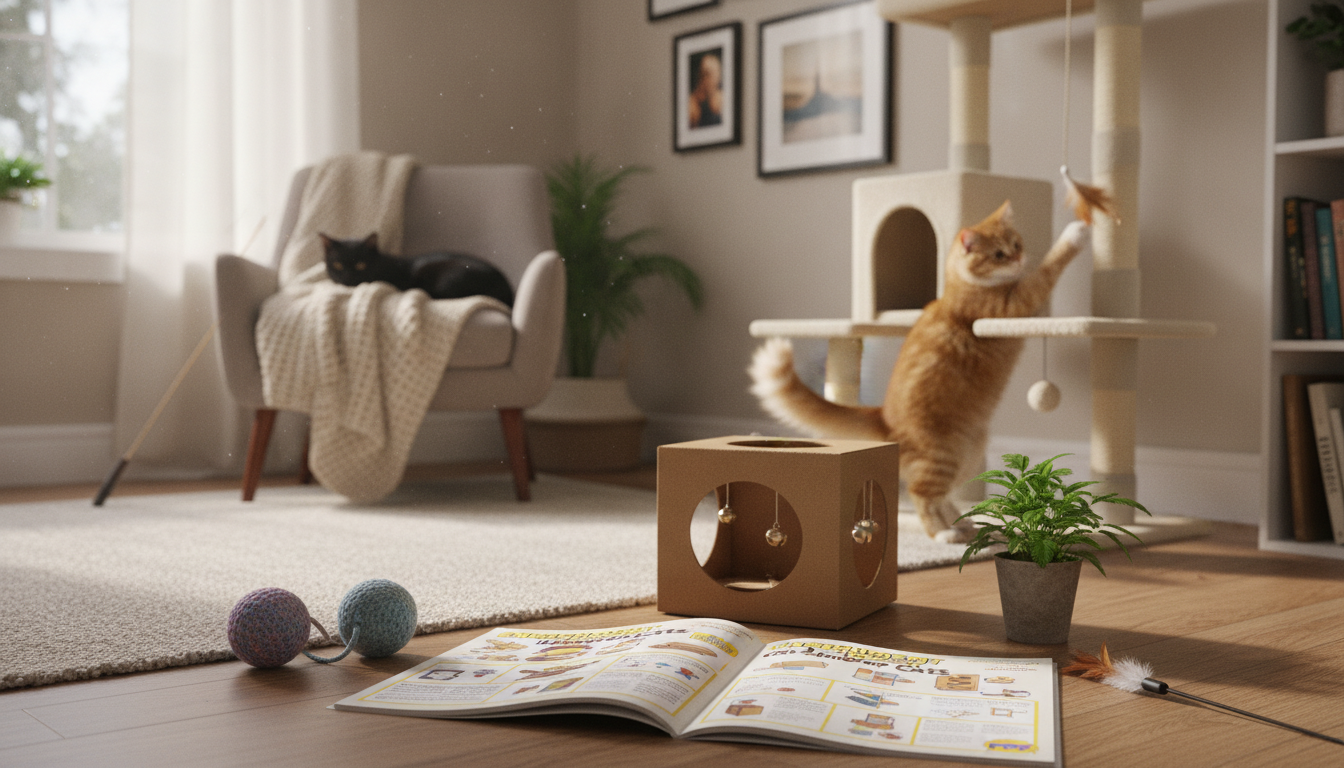
Enrichment Ideas for Indoor Cats: DIY Toys, Play Routines, and a Cat-Friendly Home Plan
Indoor cats thrive when their day includes hunting-style play, problem-solving, climbing, scratching, and safe places to rest. A simple routine—rotating a few activities—can reduce boredom behaviors like nighttime zoomies, over-grooming, or persistent meowing while supporting healthy weight and confidence. Use the ideas below to build a repeatable plan, then keep it consistent with a printable checklist and quick “grab-and-go” activities. For more guidance, see The Best Indoor Cat Enrichment Ideas: Toys, Puzzles, and More.
What counts as enrichment (and why indoor cats need it)
Enrichment isn’t “extra”—it’s how an indoor lifestyle stays balanced. Think of it as meeting your cat’s instincts in safe, apartment-friendly ways. For further reading, see Seven enrichment ideas to keep your indoor cat entertained.
- Movement enrichment: short bursts of running, pouncing, climbing, and jumping that mimic hunt cycles.
- Mental enrichment: puzzle feeding, scent games, novelty rotation, and simple training that engages focus.
- Environmental enrichment: vertical space, scratching options, window watching, and predictable “safe zones.”
- Social enrichment: play with people, co-cat compatibility support, and respectful handling (choice-based interaction).
- Signs enrichment is missing: stalking ankles, furniture scratching spikes, early-morning wakeups, food obsession, or lethargy.
For deeper guidance on environmental needs, the American Association of Feline Practitioners (AAFP) guidelines and the ASPCA’s cat enrichment overview are excellent references.
A simple daily play routine that fits real schedules
Most cats do best with a few short sessions rather than a single marathon. The goal is to “spend” energy steadily so it doesn’t all show up at 2 a.m.
- Aim for 2–3 mini-sessions daily (5–10 minutes each) rather than one long session.
- Use a hunt sequence: stalk → chase → pounce → “catch” → eat a small treat/meal to complete the cycle.
- Rotate toy types across the day: wand toy in the morning, ball track or kicker at lunch, puzzle feeder in the evening.
- End high-energy play 30–60 minutes before bedtime, then offer a small snack to encourage settling.
- Make it predictable: cats often relax more when play happens at similar times each day.
If you like having something you can stick on the fridge, the Enrichment Ideas for Indoor Cats | Printable Cat Enrichment Guide | DIY Toys, Play Routines, and Cat-Friendly Home Tips is an easy way to keep the routine consistent without overthinking it.
DIY toys that encourage safe “hunt and wrestle” behavior
Homemade toys can be surprisingly effective because they’re lightweight, unpredictable, and easy to rotate. The key is choosing materials that are safe and supervising until you know how your cat plays.
- Sock kicker: fill a clean sock with crinkly paper and a little catnip/silvervine; tie off securely; supervise until durability is confirmed.
- Paper bag ambush: remove handles, open the bag on its side, add a few crumpled paper balls for batting and hiding.
- Cardboard “prey trails”: cut holes in a box and thread a ribbon/feather through (keep ribbons put away after play).
- Toilet-roll treat tube: fold one end, drop a few kibbles inside, fold the other end; increase difficulty by tightening folds.
- Toy rotation rule: keep 3–5 toys out and store the rest; swap every few days to refresh novelty without buying more.
Food puzzles and foraging that slow down meals
Cat-friendly home setup: vertical space, scratching, and calm zones
7-day enrichment plan (repeat, swap, and personalize)
| Day | Active play (5–10 min) | Brain game (5–10 min) | Environment upgrade (1 small tweak) | Quick note |
|---|---|---|---|---|
| Day 1 | Wand toy: low-to-ground “mouse” movement | Toilet-roll treat tube | Add a cardboard scratcher near favorite nap spot | End with a small snack |
| Day 2 | Fetch with soft balls or crinkle toys | Scatter feeding in two rooms | Clear a window perch viewing lane | Rotate one stored toy back in |
| Day 3 | Laser play (finish with a real toy catch) | Muffin tin puzzle | Set up a paper bag hideout (no handles) | Watch for frustration |
| Day 4 | Kicker toy wrestling session | Lick mat (thin layer, supervised) | Add a second scratching texture | Short, calm petting after |
| Day 5 | “Stair sprints” with tossed toy (if safe) | Box holes “paw fishing” game | Create a shelf-to-tree route | Keep jumps controlled |
| Day 6 | Wand toy: vertical jumps + pauses | Hide treats under cups (easy mode) | Refresh catnip in a small toy | Swap toys to prevent boredom |
| Day 7 | Choose-the-favorite play session | Easy puzzle repeat for confidence | Tidy and reset sanctuary area | Note what worked best |
Printable guide: an easy way to stay consistent
For a ready-to-print layout you can reuse every week, keep the Printable Cat Enrichment Guide with DIY toys and play routines on hand as a quick reset tool. And if you’re building better daily habits for yourself alongside your cat’s routine, Whole You: Holistic Wellness Guide pairs well with a “small steps, consistent schedule” approach.
Safety notes and common pitfalls
FAQ
How much play does an indoor cat need each day?
Most indoor cats do well with about 10–30 minutes total per day, split into 2–3 short sessions. Adjust for age, health, and energy level, and end play with a small snack to complete the “hunt” cycle and encourage settling.
What are easy DIY enrichment ideas when time is limited?
Quick options include scatter feeding, a paper bag hideout (handles removed), a toilet-roll treat tube, a sock kicker, or a fast reset of a window perch area. Aim for a one-minute setup that gives your cat something to chase, sniff, or paw at right away.
Is laser pointer play okay for cats?
Yes, when used thoughtfully: keep sessions short, never shine the light into eyes, and always finish by letting your cat “catch” a physical toy. Follow with a small treat to prevent frustration and help your cat transition to calm.










Leave a comment